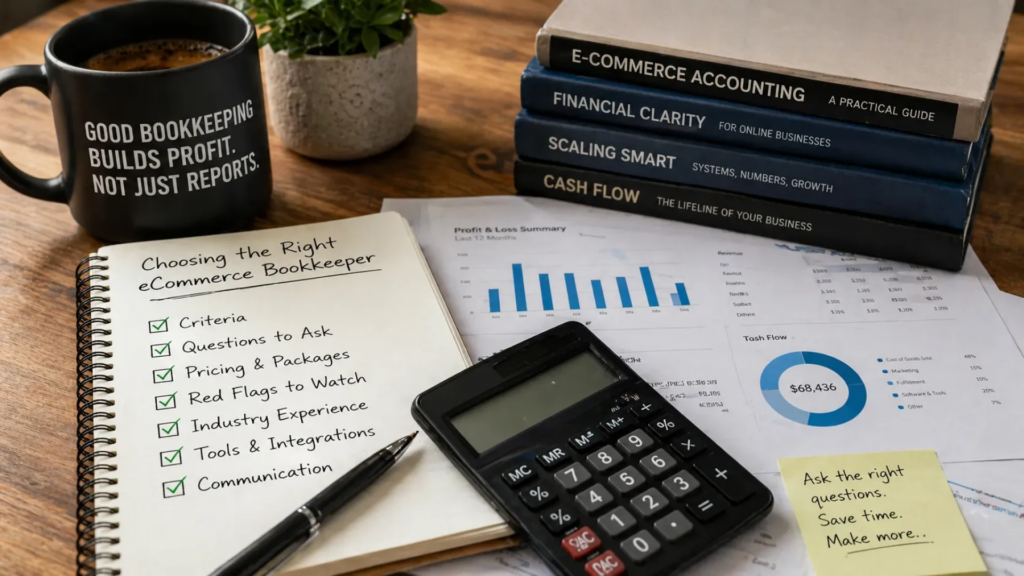
Most founders do not start an online store because they want to spend their evenings reviewing payout reports, matching deposits, or wondering why the numbers in their accounting software never seem to match what they see in Shopify or Amazon. Bookkeeping usually becomes important when confusion starts costing money. That is why choosing the right support matters earlier than most business owners think. If you are already looking for dependable bookkeeping for ecommerce, the real question is not whether someone can keep your books updated. It is whether they understand how ecommerce businesses actually work.
That distinction matters more than it may seem at first. Many founders hire a general bookkeeper, assume the setup is fine, and only discover the gaps later—usually when tax season approaches, margins look off, inventory numbers feel unreliable, or cash flow becomes harder to explain. By that point, the issue is no longer “bookkeeping” in the simple sense. It becomes a visibility problem. When your financial reports are incomplete, delayed, or misleading, every major decision gets harder.
Choosing a bookkeeper is not just an administrative hire. For an ecommerce business, it is part of your financial infrastructure.
Why Ecommerce Bookkeeping Is a Different Creature
A standard small business may have a relatively straightforward accounting flow. A client pays an invoice, the business records revenue, expenses are categorized, and the books are closed.
Ecommerce is different because revenue and cash rarely move in a straight line.
A single order can include sales tax, a discount code, shipping income, transaction fees, a payment processor deduction, a marketplace fee, a gift card redemption, and later perhaps even a return. Add multiple channels—Shopify, Amazon, Etsy, wholesale, pop-ups, retail, subscriptions—and that simple sale becomes a series of moving parts that need to be recorded correctly if the final numbers are going to mean anything.
Then there is inventory, which tends to separate decent bookkeeping from truly useful bookkeeping. In product-based businesses, inventory is not just a purchasing issue. It directly affects gross profit, tax reporting, cash flow, and future planning. If inventory is expensed incorrectly, if landed costs are ignored, or if stock adjustments are not reviewed properly, your financial statements may still look neat while quietly telling the wrong story.
That is why ecommerce bookkeeping should never be treated as simple data entry. It is operational accounting. It needs to reflect how products, platforms, payments, returns, and costs all interact in real life.
The First Conversation Usually Tells You a Lot
One of the easiest ways to spot a good ecommerce bookkeeper is to listen to what they ask you before they start talking about what they offer.
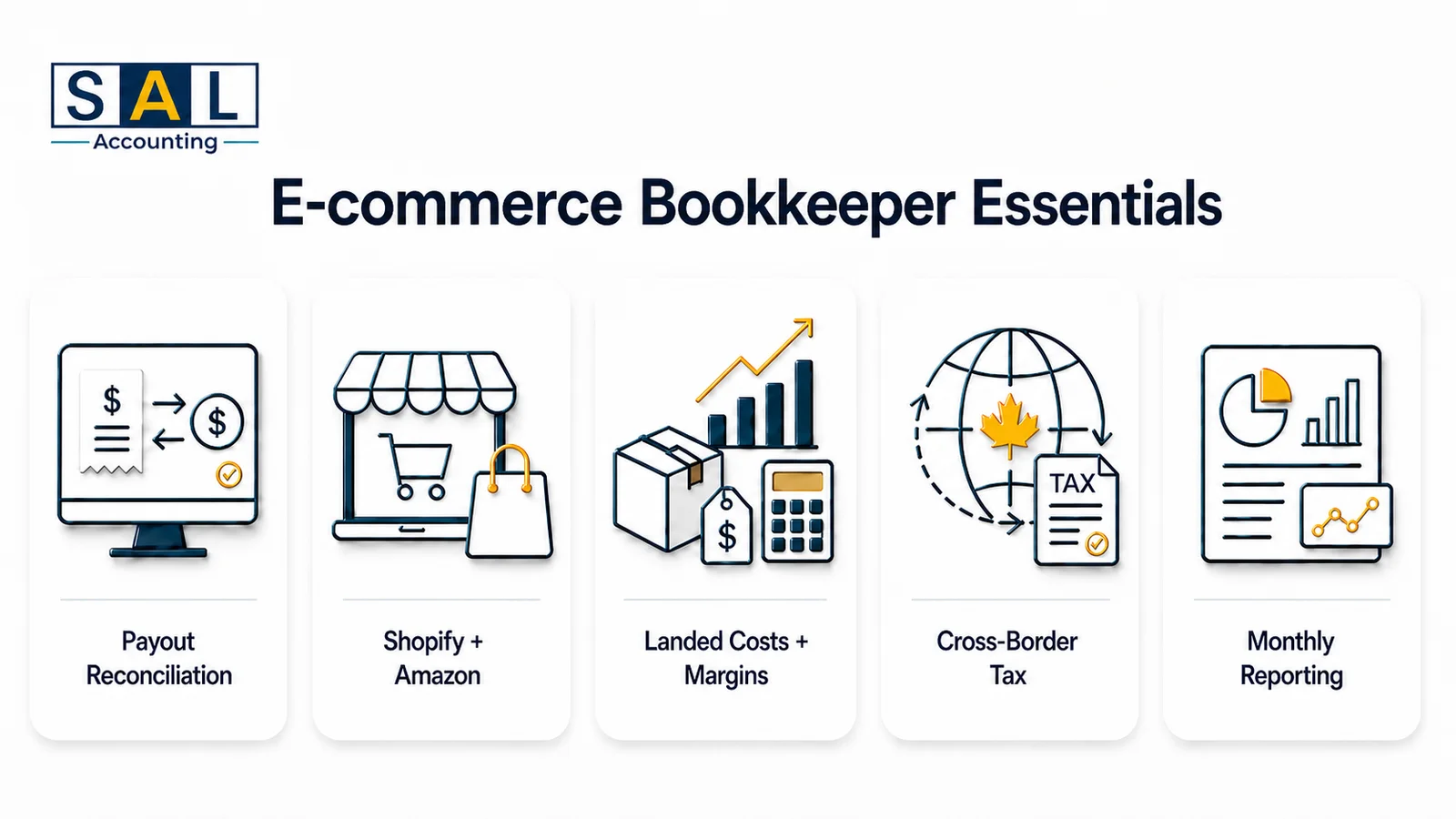
A capable specialist will usually begin with your business model. They will want to know where you sell, what platforms you use, how many payment processors you rely on, whether inventory is stored in-house or with a 3PL, how returns are handled, whether you offer subscriptions or preorders, and what kind of reporting you already rely on.
That line of questioning is not just a formality. It signals that they understand bookkeeping should be designed around how the business operates.
A generic bookkeeper may open the conversation by saying they work in QuickBooks or Xero, that they can reconcile your accounts monthly, and that they prepare standard reports. None of that is bad. But if they do not first ask how money and inventory actually move through your business, they may be approaching ecommerce as though it were just another version of a local service company. It is not.
The right ecommerce bookkeeper wants to understand the machine before they try to record the output.
The Red Flags That Should Make You Slow Down
Most bad bookkeeping setups do not look disastrous in the beginning. In fact, they often look perfectly normal until the business needs better answers.
That is why it helps to know the warning signs.
They record deposits as sales
This is still one of the most common mistakes in online retail bookkeeping.
A payout from Shopify, Amazon, or another sales platform is not the same thing as revenue. It is the amount left over after fees, refunds, taxes, chargebacks, reserves, and adjustments have already been taken out. If a bookkeeper records the deposit as total revenue, the books stop reflecting reality from day one.
This mistake usually creates distorted revenue, missing fee categories, and reports that make margin analysis unreliable. A proper ecommerce bookkeeper understands the difference between gross sales and net cash and knows how to reconcile platform settlements properly.
They get uncomfortable when inventory comes up
If you ask how they handle inventory and the answer stays vague, cautious, or overly simplified, take that seriously.
Inventory accounting affects the balance sheet, the income statement, and the timing of expenses. A good ecommerce bookkeeper should be able to explain how the cost of goods sold is recognized, how inventory purchases are treated, whether landed costs are included, and how stock discrepancies are addressed. If they cannot explain this clearly, that is a problem.
They treat bookkeeping like something done only for taxes
Some people still see bookkeeping as year-end prep work. In ecommerce, that approach is not enough.
You need numbers you can trust every month, not only once the fiscal year is over. If a bookkeeper talks only about tax season, year-end files, and accountant handoff but says little about monthly closes, reporting cadence, or operational visibility, they may be missing the role bookkeeping plays in running the business.
They avoid systems or integrations
A good ecommerce bookkeeper does not need to be a software fanatic, but they should be comfortable with the systems modern online brands rely on. That usually includes tools like Shopify, Amazon Seller Central, QuickBooks Online, Xero, A2X, and sometimes inventory management platforms or reporting tools.
If they prefer to do everything manually, or if they seem resistant to the tools that help automate and structure ecommerce accounting properly, accuracy and timeliness will usually suffer.
Their reports look polished but feel empty
A tidy-looking report is not always a useful one.
Some business owners receive monthly financials that technically reconcile but still do not answer the questions that matter: Which channel is most profitable? Are fees increasing? Are returns eating into margin? Is inventory growing too quickly? Are ad costs rising faster than contribution margin?
If the reports never help you understand what is changing in the business, the bookkeeping may be accurate on paper while still being weak in practice.
What the Right Ecommerce Bookkeeper Should Be Doing for You
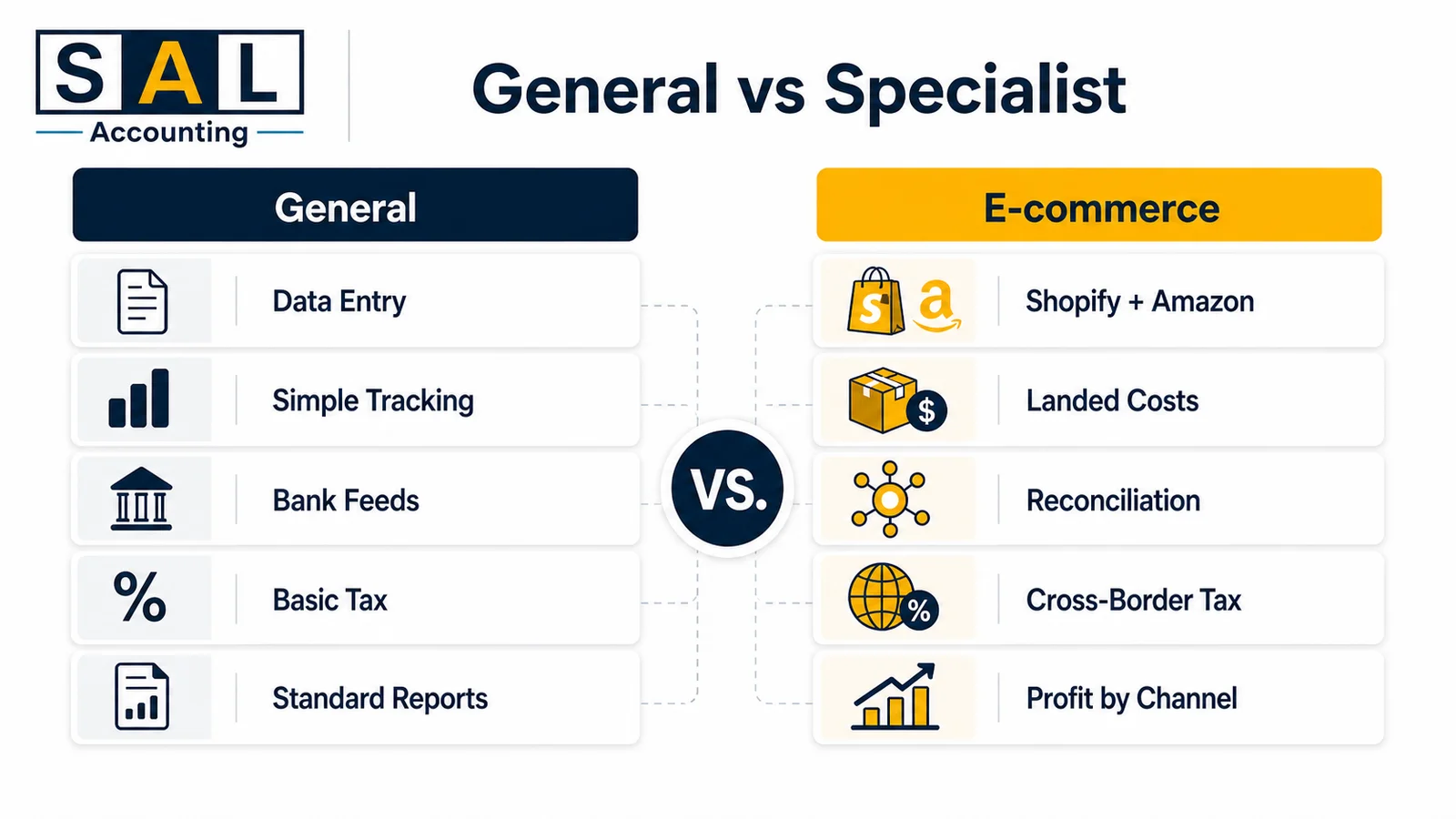
The right bookkeeper is not just there to categorize transactions. They should be helping you create a financial picture that supports better decisions.
That means they should know how to:
Just as important, they should be able to explain their work in plain language. A founder should not need an accounting degree to understand whether the business is becoming more profitable or less.
That clarity is part of the job.
Why Choosing on Price Alone Usually Backfires
It is easy to compare bookkeeping proposals by monthly cost. On paper, bookkeeping can look like a support function that should simply be kept affordable.
But weak bookkeeping is expensive in ways that do not always show up immediately.
It can create overstated or understated revenue, inventory errors, missing tax liabilities, poor margin reporting, and late insights that affect purchasing, marketing, hiring, or cash management decisions. By the time those issues are discovered, fixing them often costs far more than the savings from choosing the cheaper option.
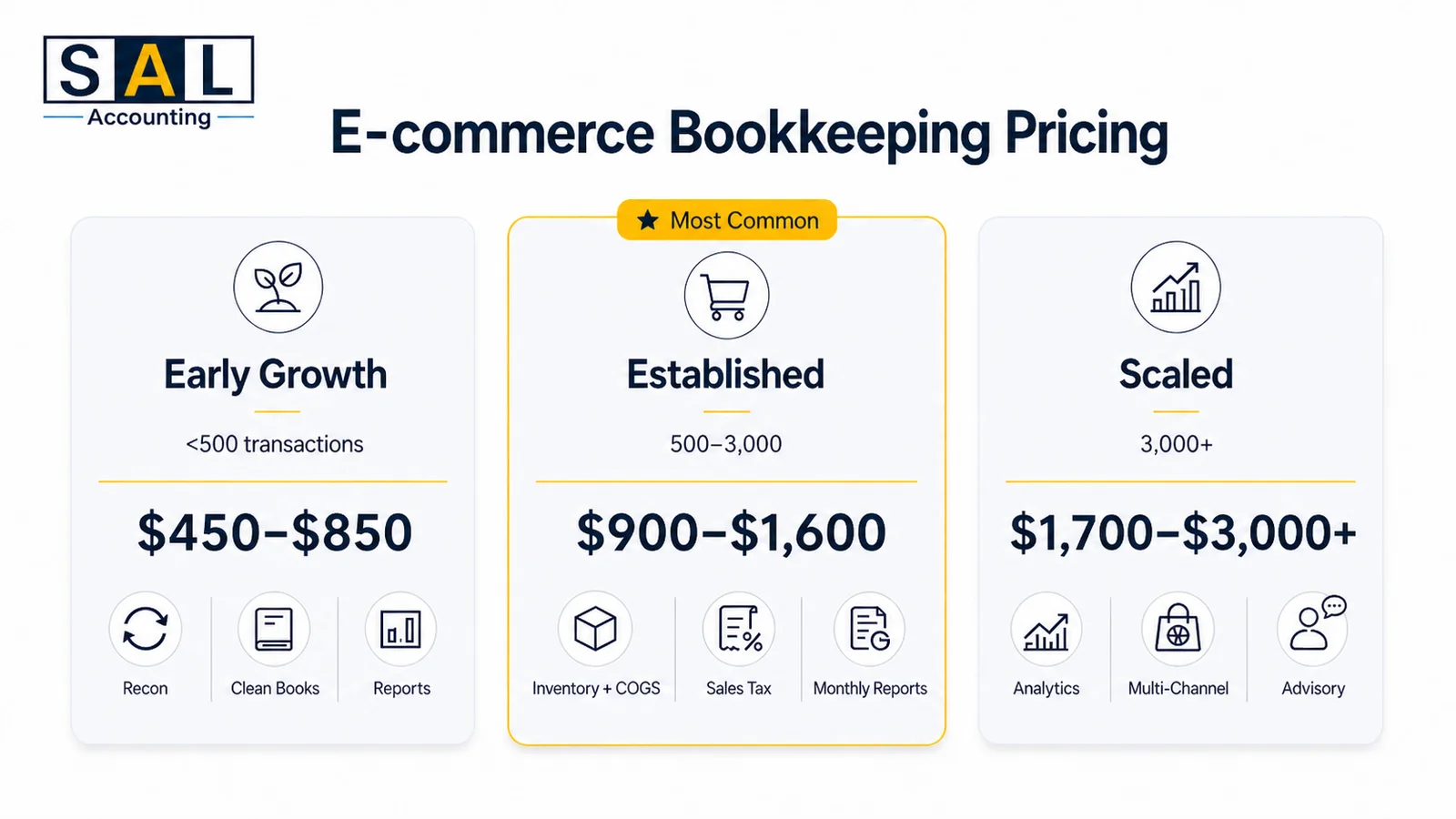
That does not mean you should always hire the most expensive provider. It means price should be weighed against clarity, specialization, process, and reliability.
You are not paying only for reconciliation work. You are paying for a cleaner view of the business.
What the Right Fit Usually Feels Like
When you are speaking with the right ecommerce bookkeeper, the experience tends to feel noticeably different.
That last point matters. Many ecommerce founders carry a low-grade anxiety around their numbers because they are never entirely sure whether the reports are complete, timely, or trustworthy. The right bookkeeper reduces that uncertainty. They bring structure to something that often feels scattered.
And once the numbers become more trustworthy, decision-making tends to become more confident too.
Final Thoughts
Choosing the right ecommerce bookkeeper is not a minor admin task. It is a meaningful business decision that affects how clearly you understand profit, cash flow, inventory, fees, taxes, and growth. If the person handling your books understands ecommerce properly, the business becomes easier to manage. If they do not, the confusion may stay hidden for months while it quietly affects planning and performance.
Take your time. Ask sharper questions. Pay attention to how they explain payouts, inventory, fees, reporting, and timing. Look for ecommerce-specific experience, not just general bookkeeping experience. And do not confuse polished reports with useful ones.
Because once the financial picture becomes clear, better business decisions usually follow.
How can SAL Accounting help you?
SAL Accounting is a strong example of what specialized ecommerce bookkeeping should look like in practice. The firm works with Shopify, Amazon, and multi-channel businesses that need more than standard bookkeeping support. Instead of applying a one-size-fits-all process, SAL Accounting focuses on the real mechanics behind ecommerce financials—payout reconciliation, inventory treatment, tax tracking, month-end reporting, and clean visibility across channels. For founders who want numbers they can actually use, that kind of specialization can save a great deal of time, confusion, and costly cleanup later on.