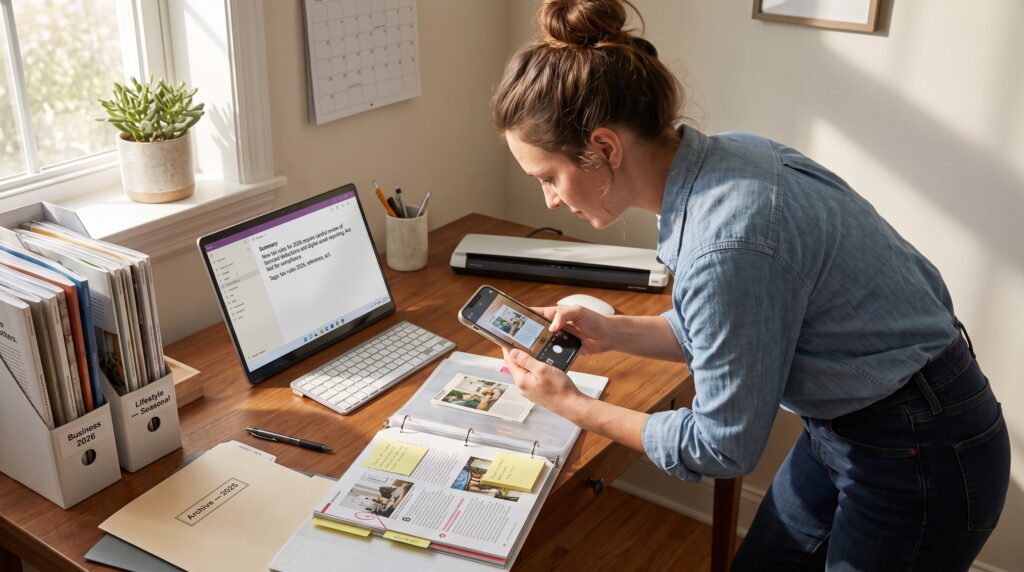
The Best Ways to Save and Revisit Useful Magazine Articles matter for readers who want to turn scattered features into lasting reference. This guide explains why collecting articles pays off, shows simple physical and digital systems, and highlights legal boundaries. It gives step-by-step routines that busy readers can use immediately and scale over years. The tone is practical: concrete examples, short checklists, and honest trade-offs so someone can start organizing today without overhauling their life.
Key Takeaways
- Saving magazine articles creates a valuable personal reference that supports various goals like research, career growth, and hobbies.
- Organize physical magazines by using labeled files or binders and keep clippings manageable with regular purges.
- Utilize digital tools such as web clippers, OCR scanners, and note-taking apps to capture and tag articles for easy retrieval.
- Apply consistent tagging and archiving methods with clear labels and limited inbox size to ensure quick and efficient access.
- Follow a simple workflow from reading to archiving with summaries, tags, and regular reviews to reduce time spent searching.
- Respect copyright by saving articles for personal use only, sharing links instead of full texts, and quoting briefly with attribution.
Why Saving Magazine Articles Pays Off — Use Cases And Goals
Saving magazine articles prevents lost ideas and supports repeatable goals. Researchers, parents, hobbyists, and side-hustlers keep facts, how-tos, and inspiration that otherwise disappear behind paywalls or tossed issues. Specific use cases: building a topical reference library for career moves, preserving a single investigative piece for later citation, and collecting recipes or crafts that recur seasonally. A clear goal, for example, “save 30 career articles by year-end”, makes decisions easier. Practical warning: hoarding without a plan creates noisy archives. A better approach is to save with intent: tag by project, note the action to take, and set a one-sentence reason (e.g., “data source for Q3 report”).
Best Physical Methods: Organizing Print Issues And Clippings
Start with one fact: physical magazines stay valuable when they’re easy to find. Keep whole issues upright in labeled magazine files or archival binders sorted by year and topic. For clippings, slip pages into clear sleeves and add a small sticky with publication, issue date, and page number. Use a simple file cap, limit active clippings to 50 items per binder, so the system forces purges every six months. A useful trick: photograph each clipping before filing: the photo is a quick searchable fallback. Honest moment: many readers underestimate space: one editor found 120 loose clippings after a year and spent two evenings sorting them into three binders, set a 30-minute weekly habit to avoid that pile-up.
Top Digital Tools For Clipping, OCR, And Note-Taking
Quick answer: digital capture multiplies access. Web clippers and note apps (Joplin, Zotero, Diigo) let readers clip full articles, save metadata, and store highlights. Scanning apps with OCR turn print pages into searchable text: OCR accuracy often exceeds 95% on clean pages. When saving, add a two-line summary and three tags: topic, project, and status. A practical stack: a web clipper for online pieces, a scanner app for print, and a note app for distilled summaries. For readers curious about launching their own magazine site and organizing digital content, the site’s detailed guide is useful in planning content flows and archives: see the digital magazine guide for setup ideas. Caution: check app export options, select tools that export to plain files (Markdown or PDF) to avoid vendor lock-in.
Bookmarking, Tagging, And Archiving Strategies For Fast Retrieval
Fast retrieval requires predictable labels. Use consistent tags such as topic, publication, year, and intent (reference/read/act). Start every session by triaging new items into three collections: inbox, reference, archive. Move only high-value or unique items to the long-term archive. When tagging, favor short noun phrases: “SEO checklist,” “kid crafts,” “tax rules 2026.” Use full-text search in your bookmark manager so tags act as filters rather than the only retrieval method. Practical metric: aim to keep the inbox under 25 items: if it exceeds that, schedule a 20-minute purge. Example tools that work well include Zotero for research-style archives and lightweight bookmark managers for quick saves.
Example Workflow: From First Read To Long-Term Archive
Start with the fact: a four-step workflow reduces friction and clutter. 1) Decide: delete, act, or reference immediately after first read. 2) Clip and write a 25–50 word summary capturing the article’s unique claim and two action points. 3) Tag with three labels and file into reference or archive. 4) Review weekly: act items move to a task list: reference items stay for monthly review. A typical result: readers reporting a 40–60% reduction in time spent searching for sources during projects.
Building A Personal Reference System That Scales
Key point: scale comes from limits and routine. Use structured folders, consistent tags, and a review cadence. Set two hard limits: inbox size and annual archive additions (for example, 200 new items per year). Convert important clips into concise evergreen notes, one idea per note, with a single example and source link. Automate exports quarterly to an offline folder named by year. Readers who manage growing collections adopt a canonical naming pattern: YYYY-MM-DD, Source, Short Title. That pattern helps when searching by date or publication. For broader context on building a modern magazine workflow and publishing choices, explore the practical tips on the redandwhitemagzcom blog. Honest lesson: the first system will change: design for easy migration by using open formats like Markdown and PDF.
Copyright, Sharing Etiquette, And Staying Legal
Clear rule: personal saving is usually allowed in limited amounts, public redistribution is not. For private research or study, copying single articles for personal use typically sits inside fair use or similar allowances, but rules vary by region. Never post full-text scans or charge for access. When sharing, link to the publisher’s official page instead of uploading the article. If collaboration requires extracts, share brief quoted passages (with attribution) and a link. For publishers or creators, know that licensing exists, seek permission for repeated or commercial use. Readers who want a primer on how magazines handle digital content and rights can read relevant coverage in the technology topics and see how coverage practices affect reuse. Practical warning: sending a full scanned article to a workgroup can trigger takedown requests, use links and short summaries instead.
How Red And White Magz Covers Business And Finance
Insight: industry-focused archives matter for recurring reference. Red and White Magz organizes business and finance pieces so readers can track trends and cite past reporting. For example, a reader saving quarterly market analysis can cross-reference earlier pieces to build a timeline for a pitch or report. Use the site’s section on business coverage to find related reporting before saving copies. Tip: when collecting financial analysis, note the data source and the exact figure cited, numbers change, and a saved article should include the snapshot date. Vulnerable moment: one freelancer reused a 2022 statistic without checking later revisions: that mistake required an apology and an email correction. Avoid it by adding the data source and retrieval date to every saved note.
A Reader’s Guide To The Magazine’s Lifestyle Section
Fact first: lifestyle pieces often contain evergreen how-tos worth saving. Categorize lifestyle saves into recurring seasons (holiday, summer, back-to-school) and personal projects (home, health, fashion). When clipping a lifestyle article, extract the specific steps, materials list, and timing, these practical details make the saved piece usable later. For inspiration and sourcing, the site’s lifestyle guide shows editorial planning that helps readers identify which articles will age well. Practical system: convert recurring guides into checklists and store them under a “seasonal” tag so they resurface at the right time.