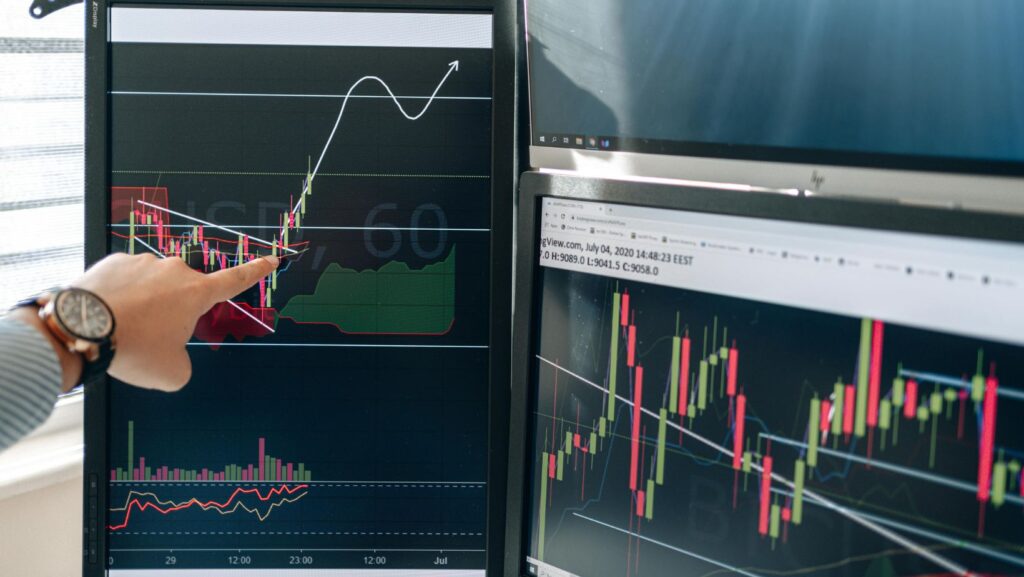
Market uncertainty can create opportunities for traders but also pose challenges. Fast price changes and unpredictable momentum make trends harder to read, leading to false signals and emotional decisions.
To manage these conditions, traders use technical tools, chart patterns, and risk management. Learning to spot, confirm, and predict trends or reversals is important for disciplined trading. With a clear plan and practical knowledge, traders can make good decisions even in fast-moving markets.
Understanding Market Trends
A market trend is the overall direction in which an asset’s price moves over a period of time. Trends usually fit into these categories:
Uptrend: Prices reach higher highs, showing steady buying demand.
Downtrend: The market declines overall, with persistent selling.
Sideways/Range-bound: Prices move within a set range, without a clear upward or downward trend.
Short-Term, Medium-Term, and Long-Term Trends
Trends can also be grouped by their duration:
Short-term trends: Last from minutes to a few days; useful for day trading or scalping.
Medium-term trends: Over the last several days to a few weeks, often used in swing trading.
Long-term trends: Last from weeks to months or longer; important for position trading and investment decisions.
Impact of Volatility on Trend Reliability
High volatility makes it harder to spot real trends. Quick price swings can lead to false breakouts or patterns.
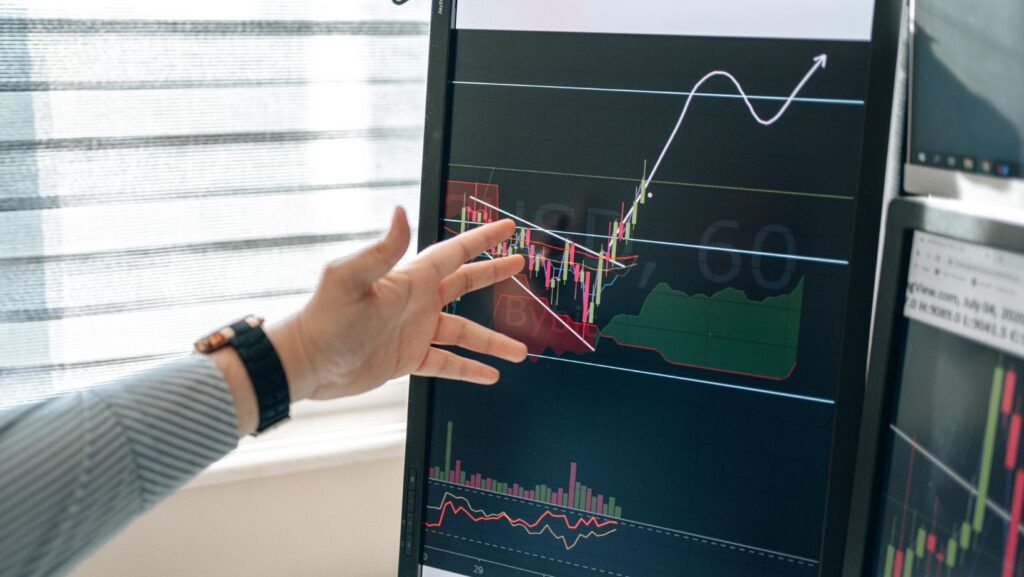
Traders use confirmation tools such as volume, momentum indicators, and chart patterns to assess whether a signal is reliable before acting.
Chart Patterns in Volatile Markets
In volatile markets, chart patterns help traders identify potential reversals or continuations, even when prices move quickly.
Reversal Patterns: Patterns like head-and-shoulders and double tops or bottoms signal that a trend may soon reverse.
Continuation Patterns: Flags, pennants, and the cup-and-handle pattern help traders spot pauses in a trend that often lead to its continuation.
Price Action and Signal Confirmation
Price action is the practice of watching real-time market movements to read trends and confirm potential trading signals.
Candlestick Analysis: Patterns such as pin bars, engulfing candles, and dojis show the strength of buyers and sellers and can highlight possible turning points in the market.
Confirmation with Volume and Momentum Indicators: Tools like volume, RSI, and MACD help confirm that a price move has real market support, reducing the likelihood of acting on weak or false signals.
Avoiding False Breakouts: In turbulent markets, false breakouts can occur due to price swings. To limit risk, traders often wait for several confirmations, such as a candlestick close above a pattern or a volume spike, before entering a position.
Risk Management Strategies
Risk management is essential when trading in volatile markets. It helps protect your capital and supports consistent results.
Stop-Loss Placement: When placed correctly, stop-loss orders limit potential losses and protect against sudden market changes. Dynamically calculated stops, such as those based on volatility or ATR, are often more useful in volatile markets.
Position Sizing in High Volatility: Adjusting your trade size based on market volatility helps manage risk. Taking smaller positions is often safer during large price swings.
Hedging Strategies: Traders can use options or related assets to hedge and reduce potential portfolio losses.
Avoiding Overtrading: High volatility can tempt traders to take too many positions. Staying disciplined and following a set trading plan helps reduce the risk of impulsive decisions and ongoing losses.
Conclusion
To analyze market trends in volatile conditions, traders should use technical tools, chart patterns, and strong risk management. Watching price action, confirming signals with volume and momentum, and spotting patterns like the cup-and-handle can help traders find better opportunities and avoid false signals. Using these methods along with proper position sizing, stop-losses, and emotional control helps traders make more accurate decisions in uncertain markets.