Artificial Intelligence is gradually beginning to become part of regular business processes. This is the trend that involves the use of AI in performing various tasks, answering questions, analyzing data, and assisting employees.
Sometimes the application of artificial intelligence may go unnoticed because quick responses, sound advice, and smooth processes may not be recognized as a result of the use of AI.
Thanks to development in the field of AI, companies find ways to improve their performance without interfering with the processes.
How AI Is Influencing Daily Activities at Work
A lot of companies have the same activities on a daily basis, such as entering data, replying to e-mails, preparing reports, and checking information about their customers.
AI has the potential to simplify these tasks, as it can sift through massive data, recognize patterns, and finish tasks rapidly.
For example, it can classify customer emails and direct them to the appropriate department, thus saving time and reducing the response time of the employees.
It’s not all about human replacement with AI. Repeats or simplifies tasks, often allowing other more important tasks to be done by employees.
AI in Customer Support
One of the areas which are changing thanks to artificial intelligence is the area of customer service.
For example, many firms apply chatbots, which are used for answering the questions asked by customers.
This technology is able to provide information concerning such issues as the details of orders, the services offered by the firm, its working time, and the details of the customer’s account.
AI modernization is capable of analyzing the text of customer’s questions and determining their problems.
If human intervention is required in further stages of processing questions, then the question is directed to the relevant department.
However, the firm should guarantee human intervention in the case of complex questions.
Smarter Data Management
Data collection is done by the business from its sales, websites, customers, and even internally. Manually organizing the information collected may require much effort and time.
AI can assist in organizing data, discovering gaps, and spotting patterns in them. It can even assist employees in searching the vast data in their records.
For instance, the sales department can employ AI to analyze customer activities and discover which ones may require further action.
However, the findings still have to be evaluated. Inaccurate information can influence decisions made; thus, it is advisable to evaluate information before employing it.
AI and Employee Productivity
AI is also changing the way that employees perform their duties each day.
AI applications are able to assist employees in generating rough drafts, summaries, minutes, and research. With these possibilities, employees will be able to save time performing simple tasks.
For instance, employees can use AI applications to generate summaries of lengthy reports without having to read through the whole document. Through such actions, employees can gain insight into the document’s key elements.
Firms should set rules regarding the application of such programs. Employees must learn how to check the information, protect sensitive data, and use AI effectively.
Improving Business Decisions
The use of AI enables the organization to analyze and determine patterns from the information available. This will help in making informed decisions regarding sales, stock, customer behavior, and operations.
A retail firm can make use of AI to analyze purchasing trends. This will help the firm to determine the products that customers prefer.
AI cannot assure accurate predictions. Predictions will be dependent on the accuracy of the data, the software used, and how workers analyze the data.
Firms need to integrate the information from AI with human judgment, especially when the decisions have financial, consumer, and company operation implications.
Automating Repetitive Workflows
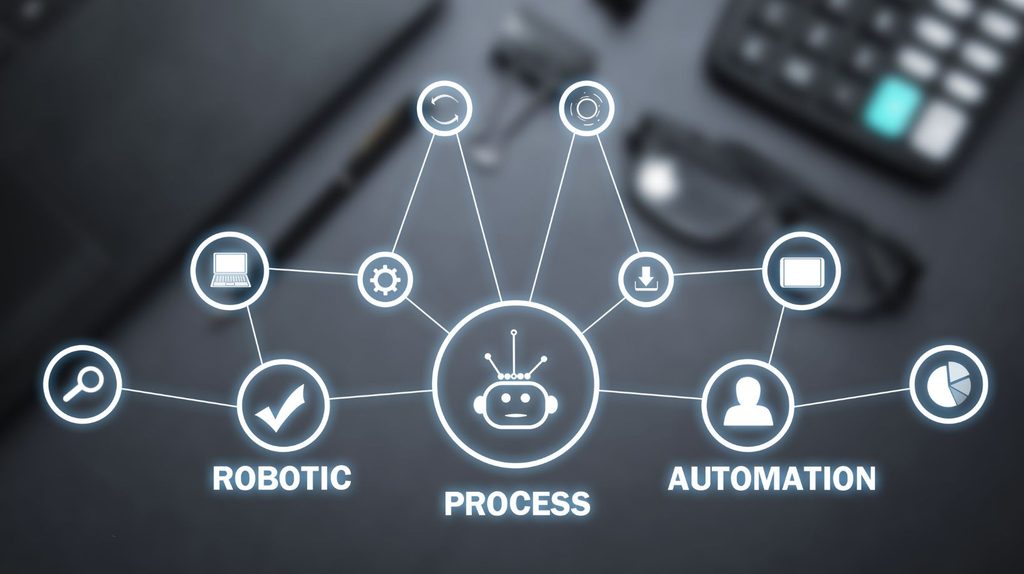
Business workflows often have repetitive tasks. Workers may need to enter information from one system to another, send periodic reports, or check certain information multiple times a day.
Using artificial intelligence and automation technologies can decrease such human effort. This will help save time and allow workers to concentrate on more complicated tasks.
Prior to automation of any process, companies need to evaluate the process itself. Otherwise, a bad process will be automated even further.
Challenges Businesses May Face
AI may be able to deliver a number of helpful advancements, although sometimes its implementation might not be easy.
For instance, companies might encounter some difficulties related to the following:
- Inefficient data
- Expensive set-up
- Challenges during software integration
- Training requirements
- Security and privacy issues
- Incorrect results delivered by AI
You must never introduce any solution merely because other companies do so. One must find a problem that exists and check if AI is capable of solving it.
A trial of a small-scale project would allow understanding the advantages and disadvantages of the technology.
How to Get Ready for AI-driven Changes
First of all, companies should conduct an analysis of their work processes. Discover which processes are too time-consuming, error-prone, or done unnecessarily manually.
Then, set specific goals. These can include faster reaction time, cost savings, staff assistance, or business organization.
Select suitable tools and systems. Moreover, make sure that the employees are appropriately trained to use AI.
Evaluate the effects of the tool. Make sure that it saves you time, increases precision, or brings some additional challenges.
Final Thoughts
Artificial intelligence technology is having some subtle influences on business activities. These include customer service, processing of data, productivity of employees, and automation.
There is no need for a business to make alterations in all the systems at one go.
The firm should develop some practical solutions, improve the software, and also train employees to apply AI.
The best result can be obtained by combining technology with proper objectives and data.