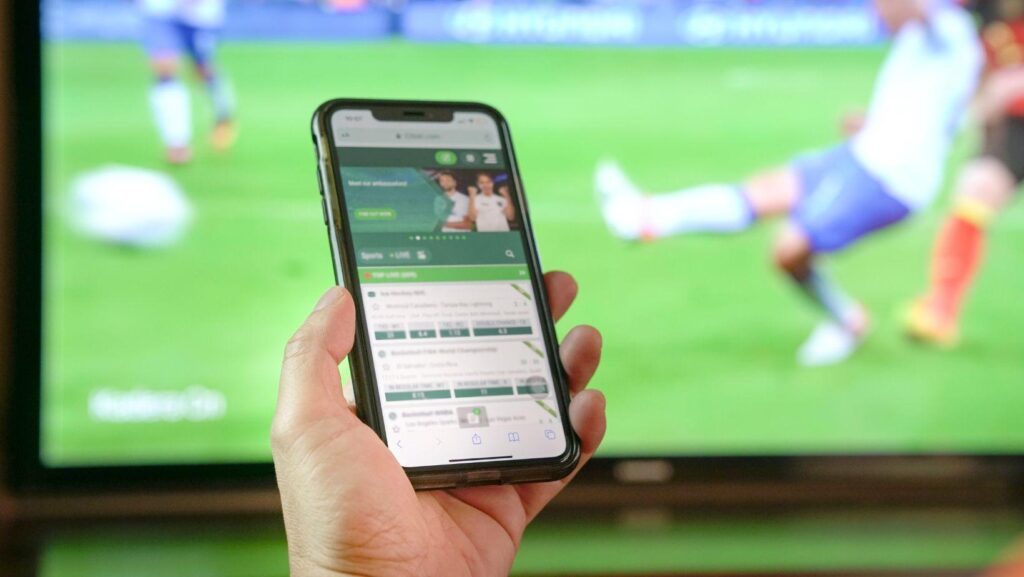
The US sports betting industry booked $13.7 billion in revenue in 2024, according to ESPN. New Jersey, New York, and Illinois collected most of that. Texas collected zero. Not because Texans don't bet. They very obviously do. But because every dollar wagered in the state flows offshore, out of reach of regulators, tax collectors, and domestic operators alike.
D CEO Magazine put a number on it in March 2026: an estimated $7.16 billion in annual wagers leaving Texas for offshore platforms. That's not a rounding error. That's a mid-sized US sports betting market running entirely outside the regulated system.
Intercontinental Exchange saw the opportunity clearly enough to pour $2 billion total into Polymarket by early 2026, with a fresh $600 million tranche arriving in March. ICE's interest isn't sentimental. Polymarket and platforms like Kalshi have become the legal prediction-market layer that sharp bettors in locked-out states. Texas chief among them. Use to get exposure to sports outcomes without touching a traditional sportsbook. For the estimated 11 million Texans already placing wagers offshore, the question isn't whether to bet. It's knowing which sports betting sites for Texas players are actually licensed, liquid, and safe.
That's the gap the market is pricing. And it's why investors paying attention to the Texas deadlock right now are looking at this differently than a regulatory-news story.
The Size of the Problem Is Also the Size of the Opportunity
Texas crossed 31 million residents in 2024, according to the Texas Tribune, making it the second-most-populated state in the country. Population alone doesn't create a betting market. But enthusiasm for the Cowboys, the Astros, the Spurs, and the Longhorns does. Texas has some of the most passionate sports fanbases in the country. The state has zero legal avenue to bet on any of them.
Compare that to New York, which launched mobile betting in January 2022 and immediately set handle records. In its first full year, the state generated north of $16 billion in total handle. Texas has a comparable population base and arguably stronger local team loyalty. The revenue potential isn't speculative. It's visible in the data from every comparable state that legalized.
What makes the Texas gap unusual is that the demand has already been there for years. People aren't waiting to discover sports betting. They're already doing it, just through channels that don't pay Texas a dime.
Why the Deadlock Has Lasted This Long
The Texas legislature meets every two years, not annually. That structural quirk alone slows everything down. A failed bill in one session doesn't get a second look for another 24 months. Add to that a coalition of interests actively opposed to legalization: a significant chunk of the Republican caucus on social-conservative grounds, the tribal gaming compacts in neighboring Oklahoma worried about competition, and a powerful lottery lobby that doesn't want regulated sportsbooks eating into scratch-card revenue.
The pro-legalization coalition isn't weak. It includes the Dallas Cowboys, the Houston Rockets, the Texas Rangers (the baseball team, not the law enforcement agency), and a growing group of state senators who've watched billions leave for Nevada and offshore operators. But getting a constitutional amendment through Texas requires a two-thirds supermajority in both chambers. That's a high bar.
The 2025 legislative session came close. A bill cleared committee and got floor debate before stalling. The 2027 session is the next real shot.
For investors, that timeline matters. A legalized Texas market doesn't just add Texas revenue. It reprices every sportsbook operator's growth outlook, potentially overnight.
How Fintech Infrastructure Is Already Filling the Gap
KPMG's Pulse of Fintech report for H2 2025 documented global fintech investment rebounding to $116 billion, with digital assets nearly doubling year-over-year to $19.1 billion. That capital surge isn't abstract. A meaningful portion of it is going into the payment rails, KYC infrastructure, and wallet architecture that offshore sports betting platforms depend on to serve US-based customers.
The platforms capturing Texas wagers today aren't fly-by-night operations. The serious ones run on licensed fintech stacks, process crypto deposits through compliant custody solutions, and handle KYC flows that would look familiar to anyone who's onboarded with a regulated neobank. That's the crypto betting infrastructure that's been maturing quietly while the Texas legislature debates.
Bitcoin and USDT are the dominant deposit rails for Texas-based offshore bettors, partly because they sidestep the bank-level blocking that catches card transactions to gambling merchants. The GENIUS Act stablecoin framework, which cleared in 2025, adds another layer of legitimacy to that infrastructure. Stablecoin-denominated betting accounts are becoming a standard product, not an edge-case workaround.
For an investor, this creates an interesting split: the upside from Texas legalization flows to the publicly traded US operators (DraftKings, Flutter's FanDuel, MGM's BetMGM). But the downside protection for that capital sitting offshore today belongs to the platforms already capturing it.
What Legalization Would Actually Trigger
If Texas passes a legalization bill and it survives the constitutional amendment referendum. Which requires a majority popular vote. The timeline to a live market runs roughly 18 to 24 months from passage. Licensing, technical certification, and operator buildout take time. New Jersey took about nine months from law to first bet. Texas, with its scale and political complexity, would likely need longer.
The immediate market impact: offshore platform handle from Texas drops sharply. Estimates from comparable state launches suggest 60 to 70 percent of existing offshore bettors migrate to domestic apps within the first year, attracted by better promotional offers, local banking convenience, and the ability to deposit with a debit card without the friction of crypto conversions.
That migration creates one of the cleaner market-timing opportunities in US fintech right now. The offshore platforms that have spent years building Texas-based userbases know the window is finite. The domestic operators know the prize is enormous. Both are already positioning.
NBA Commissioner Adam Silver backed a proposal in July 2026 for a federal sports betting oversight framework. A betting czar of sorts. That could accelerate state-level action by standardizing licensing and integrity protocols. If that framework moves, it removes one of the remaining objections Texas lawmakers cite: fear of a fragmented, state-by-state patchwork that creates regulatory arbitrage problems.
The Investor's Read
Texas legalization isn't a question of if. The economics are too lopsided for it to stay illegal indefinitely. The question is which session, and how to position around the uncertainty in the meantime.
The $7.16 billion in annual offshore wagers is money that exists right now, being captured by platforms operating outside the domestic regulatory perimeter. Some of that spend flows through the same blockchain infrastructure that crypto-focused investors already track. The site-level data on withdrawal speeds, licensing status, and crypto payment options matters to Texas bettors today for the same reason due diligence matters to any investor evaluating a market: you want to know which operators will survive the transition.
Texas mineral rights became a serious investor conversation once the Permian Basin's production numbers made the opportunity impossible to ignore. The sports betting market is at a similar inflection point. The production numbers (D CEO's $7.16B, KPMG's fintech rebound, ICE's Polymarket commitment) are in. The argument is made. The timeline is the only variable left.
Frequently Asked Questions
Is sports betting legal in Texas right now? No. As of July 2026, Texas has no legal commercial sports betting framework. Texans can legally bet on horse racing through state-regulated tracks, but there's no licensed mobile or retail sportsbook operating inside the state. The next realistic legislative window is the 2027 session.
Where are Texans actually betting right now? Mostly offshore platforms that accept US customers and operate under international licenses. Curaçao eGaming being the most common. Crypto deposits via Bitcoin and USDT are the standard funding method, since major US banks block card transactions to gambling merchants. Prediction markets like Polymarket and Kalshi are also popular for sports-outcome exposure.
How big would a legal Texas betting market be? D CEO Magazine estimated $7.16 billion in annual offshore wagers from Texas in a March 2026 analysis. State analysts have modeled a legal market generating between $500 million and $800 million in annual gross gaming revenue once domestic operators are competing, which would translate to roughly $150 to $200 million in state tax revenue at standard rates.
What's stopping Texas from legalizing? Three things: a biennial legislature that only meets every two years, a two-thirds supermajority requirement for constitutional amendments (the mechanism most analysts see as the path to legalization), and a coalition of social-conservative lawmakers and competing gambling interests in neighboring states. The economic case for legalization is not seriously disputed. The political math is.
How does the Polymarket/ICE investment connect to Texas betting? Intercontinental Exchange committed $2 billion total to Polymarket by early 2026 because prediction markets are the legal, regulated alternative to traditional sportsbooks for bettors in states like Texas. Polymarket allows users to trade on sports outcomes using crypto, within a framework that's currently distinct from regulated sportsbook operations. It's become the institutional-grade alternative while Texas sorts out its legislative calendar.
—
The capital is already following this story. Institutional investors are pricing the Texas legalization event into operator valuations, offshore platforms are building the customer relationships they'll eventually have to defend against domestic competition, and fintech infrastructure is maturing fast enough that the transition, when it comes, will be smoother than most people expect.
Bet accordingly. And by that I mean invest accordingly. Gambling involves risk. Please play responsibly and only wager what you can afford to lose. If gambling is becoming a problem, visit BeGambleAware.org or call 1-800-GAMBLER.