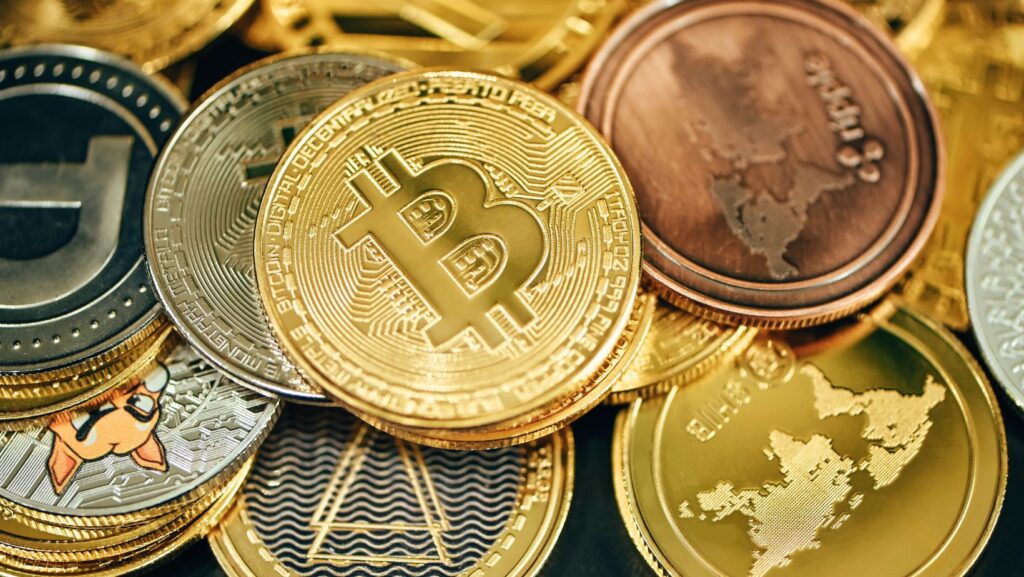
The market of cryptocurrencies is really very different from the one that we have imagined. However, it is a very fast and volatile industry which cannot be ignored. Governments are creating better regulations, institutions are investing more confidently and blockchain technology is beginning to be adopted and put into use rather than just speculation.
But the market’s volatility has yet to wane. The world’s interest rate announcements, geopolitical uncertainty, and inflation data continue to reverberate through the world of digital assets, including Bitcoin. But, despite these changes, the number of adoptions continues to rise. That was an experimental corner of finance that is increasingly a part of the global financial system.
In parallel, the Crypto Exchange ecosystem has evolved into a modern one, which has also changed the way people interact with digital assets. Exchanges no longer provide a simple trading platform. A lot of exchanges offer staking, AI-powered trading tools, tokenized assets, lending services, self-custody features, and integrations with decentralized finance (DeFi) platforms. The divisions between the traditional financial world and Web3 are shrinking annually.
Institutional Capital Continues to Flow Into Crypto
The journey of crypto has been marked by many milestones, one of the most prominent being the growing participation of institutional investors. The big banks, the hedge funds, payment players and asset management firms are growing their digital asset and blockchain exposure. More companies are now looking at cryptocurrencies as an investment component of a long-term financial plan rather than a quick get-rich scheme.
For example, Intesa Sanpaolo, Italy’s biggest bank, reportedly increased its total crypto-asset holdings by more than $100 million to nearly $235 million in Q1 2026, a sum more than 200% of the previous investment. This squares with a wider institutional trend of diversifying their digital asset holdings and not keeping all their assets in Bitcoin.
Institutional investors are increasingly interested in:
- Bitcoin as a macro hedge
- Ethereum staking opportunities
- Tokenized real-world assets
- Stablecoin settlement systems
- Blockchain-based treasury operations
This institutional adoption is important for several reasons, including the increase in liquidity, strengthening of infrastructure, and regulatory clarity. The continuous market is shifting away from retail speculation, and the market’s long-term capital strategies are becoming more favourable.
Market data sites like XBO.com, CoinMarketCap, and CoinGecko are still monitoring the rise in market cap and volume of millions of digital assets. Despite some volatility in the crypto market, the current capitalization of the global market is still in the multi-trillion-dollar range.
Stablecoins Powering Digital Payments
Today, stablecoins are no longer just trading pairs but one of the most integral parts of the crypto economy. In 2026, stablecoins are gaining traction among businesses, fintech firms, and cross-border payment companies in terms of their settlement efficiency.
Typically, they are supported by other stable cryptocurrencies or by fiat currencies such as the US dollar. As they become more popular, cryptocurrencies are making a transition from speculation to real financial applications.
There are several trends on the rise that are driving the growth of stablecoins:
- Faster international remittances
- Reduced payment processing costs
- On-chain payroll systems
- Merchant payment integrations
- Institutional settlement networks
The market data shows that stablecoins now make up a large percentage of the daily volume of crypto transactions. They are also gaining attention from regulators, who are establishing frameworks to guarantee transparency of the reserves and financial stability.
Stablecoins are no longer a haven for investors. They are playing a role in decentralized finance, yield generation, and the provision of liquidity in the market more and more.
AI-Blockchain Integration Accelerates
2026 is shaping up to be a year of fusion between artificial intelligence and blockchain. Users have come to engage with crypto ecosystems in a new way through the introduction of AI-powered trading systems, decentralized AI marketplaces, and autonomous financial agents.
AI agents are already being tested on decentralized finance (DeFi) protocols that can perform the following:
- Automated portfolio rebalancing
- Yield optimization
- Smart risk analysis
- Fraud detection
- Real-time trading execution
The research also underscores the maturing and acceptance of AI-driven DeFi solutions into the mainstream of decentralized applications (DApps).
This is important as blockchain offers the infrastructure that gives AI systems transparency and verifiability, and AI offers a mechanism for making blockchain decentralized systems more usable and more automated.
Growingly, investors look at projects beyond just token performance and also on the AI features and utility of the infrastructure. Developments of decentralized data indexing, oracle systems, and computation layers for artificial intelligence are becoming increasingly popular.
The Tokenization of Real-World Assets Grows
The tokenization of real-world assets (RWAs) has been one of the most game-changing advancements in crypto innovation. Tokenization enables the representation of physical assets or traditional financial assets in a digital way on the blockchain networks.
Examples include:
- Shares of real estate owned
- Treasury bonds
- Commodities
- Corporate debt
- Equity instruments
- Art and collectibles
The settlement process can be made more efficient, which is why major financial institutions are looking into blockchain-based settlement systems.
In what is considered a conservative market, such as the repo market, Bloomberg recently pointed out that tokenization is also making its way.
The benefits of tokenization are that it can be made better:
- Liquidity
- Fractional ownership
- Settlement speed
- Global accessibility
- Transparency
Tokenized assets may one day offer investors a way to invest in the world without all the geographic and operational restrictions of traditional finance.
Crypto Regulation Is Evolving
2026 is expected to be a significant year in terms of changes in the crypto market, which has been largely undetermined by regulatory activity for years.
Many governments globally are implementing regulations governing exchanges, stablecoins, custodians and decentralized finance (DeFi) services, most notably in North America, Europe, Asia and the Middle East. This change is introduced to both safeguard users and promote innovation.
While some crypto lovers may have been against the regulations, many investors are now advocating for the positive effects of clear regulations as it minimizes institutional risk and boosts market credibility.
Some of the key regulatory priorities are:
- Stablecoin reserve requirements
- Consumer protection
- Anti-money laundering compliance
- Tax reporting standards
- Exchange transparency
- DeFi oversight
For investors, it can make for a more sustainable landscape to invest in the long term.
Security and Self-Custody are becoming Priorities
During the previous market cycles, a number of large crypto businesses went under, and investors learned the lesson: custody is important.
More people are using self-custody wallets and decentralized storage solutions to take control of their assets in 2026. Exchanges are also taking steps to boost security measures, insurance policies, and transparency measures regarding proof of reserves.
The platforms of today put a greater focus on:
- Multi-layer authentication
- Cold wallet storage
- Institutional-grade custody
- Real-time monitoring systems
- Insurance-backed protections
Users value the convenience of access yet value asset sovereignty as well, and thus are seeking hybrid approaches to centralized access and decentralized control.
Security is not considered a technicality anymore, but it is a key factor in investment decision-making.
The Future of Crypto Innovation.
The trend of crypto innovation in 2026 isn’t a mere fad; it’s a true integration into the worldwide financial system and digital infrastructure. The market is progressing from speculation and excitement to practicality, institutions, and scalable technology.
At the time, several years ago, crypto was considered to be “experimental.” Today, blockchain is widely used in payment services, AI applications, asset tokenization, and decentralized financial services throughout the world.
To be sure, the future will be shaped by the success of the industry in doing three things: innovating responsibly, distributing and usability, and automating and securing.
The crypto user experience is also becoming easier. Wallets are more straightforward, platforms are more secure, and blockchain applications are becoming more of a part of the financial mainstream.
Despite the risks and uncertainties, the industry is moving towards becoming a more comprehensive digital financial system that could revolutionize transactions, ownership, and value in the next decade.