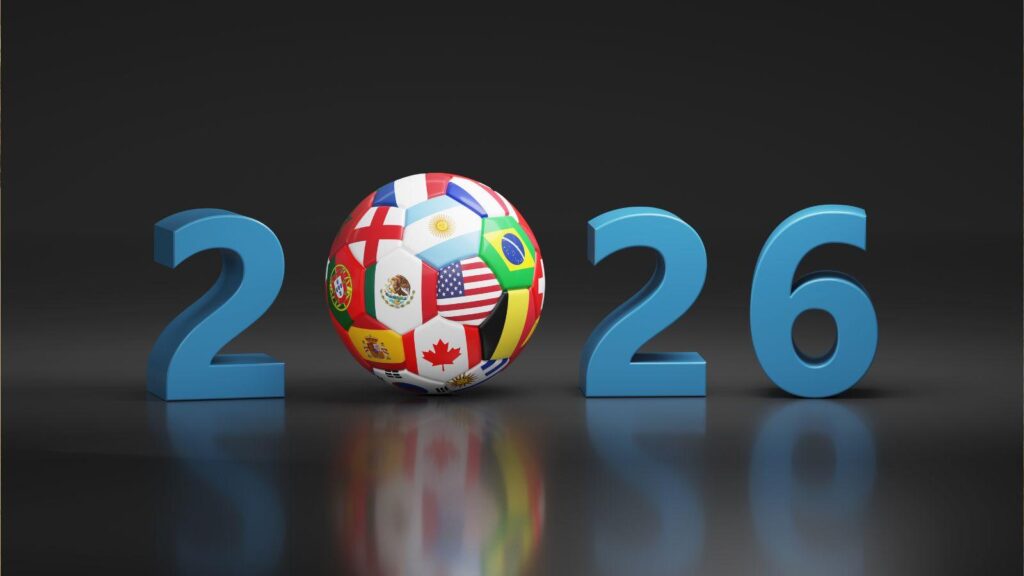
The 2026 FIFA World Cup is fast approaching, and millions of football fans around the world are eagerly counting down the days to one of the greatest sporting spectacles on the planet. For the first time in history, the tournament will be co-hosted by three nations (the United States, Canada, and Mexico), spanning 16 cities across North America. With 48 teams competing instead of the previous 32, this will be the largest and most expensive World Cup ever staged.
Football fans are already analyzing betting odds for World Cup 2026 in order to place wagers on the nations they believe will lift the trophy. As things stand, Spain, England, and France are the leading contenders, with all three sides possessing the quality and depth to go all the way. The excitement around the tournament is already building at a remarkable pace.
However, what is not discussed nearly enough is that the World Cup is also one of the most significant business investment opportunities of any given decade. The economic activity it generates, from tourism and infrastructure to media rights and sponsorship, runs into the hundreds of billions of dollars.
The Scale of the Economic Impact Is Hard to Overstate
Major global sporting events have always generated significant economic activity, but the 2026 World Cup is operating on a different level entirely. The expansion to 48 teams means more matches, more matchdays, and a longer tournament window.
That translates directly into more hotel bookings, more flights, more restaurant covers, more retail spend, and more consumer activity across every host city. Economists who track major sporting events have consistently shown that a well-managed World Cup can inject tens of billions into a host nation’s economy during the tournament period alone.
With three host nations rather than one, that economic impact is being distributed across a wider geography. Cities such as New York, Los Angeles, Toronto, Mexico City, and Dallas are set to host matches. Each of these cities is already a major commercial hub, meaning the existing business infrastructure can absorb and monetize the influx of fans at scale. For businesses operating in hospitality, retail, transport, and entertainment, the opportunity to capture a share of that spend is enormous.
Beyond the immediate tournament period, the World Cup also tends to leave a lasting economic legacy. Infrastructure built or upgraded for the event (stadiums, transport links, hotels) continues to generate value long after the final whistle. Countries that have hosted previous tournaments have often seen sustained increases in tourism and foreign direct investment in the years that followed.
Sponsorship and Brand Visibility at a Global Level
There is no other single event in global sport that delivers the audience reach of the FIFA World Cup. The 2022 tournament in Qatar attracted a cumulative television audience of over five billion people across the entire competition. The 2026 edition, with its expanded format and three-country footprint, is expected to comfortably surpass that figure. For brands looking to build global recognition, that level of exposure is extraordinarily difficult to replicate through any other channel.
Official FIFA sponsorship packages are expensive, but they are not the only route to brand visibility. Smart businesses have long understood that creative, well-timed marketing campaigns built around major tournaments can deliver substantial returns without requiring official partner status. Social media activations, influencer partnerships, limited-edition product launches, and localized advertising campaigns all represent ways to ride the wave of public interest generated by the World Cup.
The key for businesses is planning well in advance. The brands that extract the most value from major tournaments are those that have their campaigns developed, tested, and ready to deploy months before the opening game. Leaving it until the tournament begins is too late; the best commercial opportunities are claimed early.
Media Rights, Digital Content, and the Growing Streaming Market
The media landscape around major sporting events has changed dramatically over the past decade, and the 2026 World Cup will be the first truly multi-platform World Cup at scale.
Streaming platforms have been investing heavily in live sports rights, and the competition between traditional broadcasters and digital platforms for World Cup coverage is intensifying. That competition drives up rights fees, which in turn increases the commercial value of the content itself.
For content creators, publishers, and digital media businesses, a tournament of this magnitude generates sustained audience demand across multiple months. Preview content, analysis, team news, betting guides, and match coverage all attract significant traffic during World Cup periods. Businesses that produce high-quality, relevant content during the tournament can build lasting audience relationships that extend well beyond the final.
The growing intersection between sports and digital entertainment also opens doors for technology companies. Data analytics providers, streaming infrastructure businesses, and fan engagement platforms are well-positioned to benefit from the increased demand generated by a tournament of this scale.
Real Estate, Tourism, and the Host Nation Advantage
The United States, in particular, stands to gain enormously from hosting the majority of the 2026 tournament’s matches. American cities hosting games are already seeing increased interest from hotel developers and short-term rental operators who want to capitalize on projected accommodation shortages during the tournament. Real estate near stadium locations and city centers in host cities has historically performed well in the lead-up to major sporting events.
Tourism businesses across all three host nations (tour operators, travel agencies, experience providers, and destination marketers) have a rare opportunity to introduce their offerings to an international audience that might not otherwise consider visiting. A fan who travels to the United States for a World Cup match may well return as a leisure tourist in subsequent years. That long-term conversion potential is something tourism boards and hospitality businesses should be actively building strategies around right now.
All of these points lead us to one conclusion: the 2026 World Cup is, at its core, a football tournament, and for fans, the football will always come first. But for businesses willing to think clearly about the commercial landscape, this event represents a genuinely rare alignment of scale, global attention, and economic activity.